
Sick leave happens to business owners
Entrepreneurs are future-oriented and think in terms of solutions. I encounter many thriving companies that are doing well commercially, care about their customers, and know how to organize their services. But I also notice that entrepreneurs often pay less attention to absenteeism. After all, they want to do business. Sometimes they find absenteeism to be a hassle. And sometimes they are afraid of taking the wrong step in the process. As a result, absenteeism often catches the entrepreneur off guard. Occasionally, there is even mistrust. "The sick employee is trying to trick me," you hear them say.
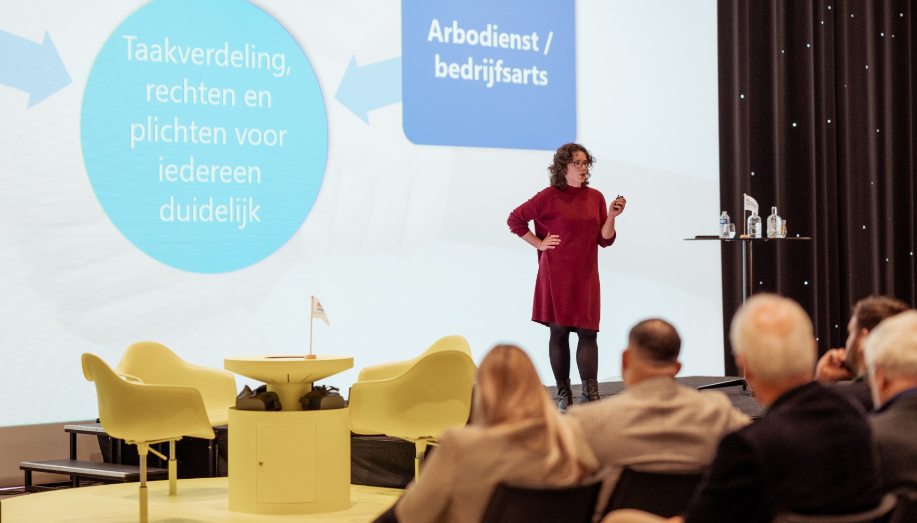
However, these are all signs that the absence process is not optimally organized. I encourage you to be entrepreneurial in this area as well. This starts with a clear absence policy, a clear absence protocol, and a clear division of roles. Every absence situation has a number of basic roles: the sick employee, the immediate supervisor such as the foreman or you as the entrepreneur, possibly someone responsible for HR, the occupational health and safety service, and the company doctor.
Who has what responsibilities?
It is crucial that you and your employees know in advance who has which responsibilities at what point in the absence process. Make the protocol and the division of roles very explicit. Who does what and when? And: what can and should we expect from each other? What are everyone's rights and obligations? But also something as simple as: how does someone in the company report sick? Preferably not by WhatsApp, but by phone. And another important question when reporting sick: what work needs to be taken over? And also: what options are there for replacement work?
Knowledge and skills
Set out your sick leave policy in an absence protocol and make sure your employees are aware of it. This includes new colleagues when they join the company. It is then important to comply with the protocol. This starts with the sick note. But even if someone is on long-term sick leave, it is your responsibility to ensure that their reintegration runs smoothly. Ensure that you and your managers have sufficient knowledge and skills to properly support the sick employee. If you do not have this in-house, brush up on your skills. Also, engage a good occupational health and safety service and submit questions in advance of each consultation with the company doctor.
Employer is ultimately responsible
As an employer, you are ultimately responsible for ensuring sufficient reintegration efforts in the event of an employee's illness. You cannot outsource this ultimate responsibility, no matter how much you might want to. Even if you seek advice from third parties, the responsibility still lies with you as the employer. Of course, a case can become so complicated that it is wise to seek advice. Feel free to do so. Schouten Zekerheid also there to help you with this.
Prevention
In addition to wanting to respond appropriately when your employees are absent due to illness, you naturally want to prevent absenteeism due to illness as much as possible. Therefore, pay attention to signs such as a short temper, making mistakes, looking tired, or a change in eating habits. These can be signs of impending absenteeism. At times like these, you want to set the bar as low as possible so that you can talk about it. "Is something bothering you?" Or: "Should I be concerned?" Questions like these can open up a good conversation. Better still, check in with your employees every six to eight weeks. The key question is: "How are you doing?"
Directed
Whatever you do, don't sit on your hands. Take action. Be just as active on the employee front as you are with your customers. Ensure a clear division of roles, secure the necessary knowledge and skills, and continue to critically question third parties who help you. No question is stupid. In short, take control.
Marleen Souverein, Absenteeism Prevention Consultant at Schouten Zekerheid
Want to know more about how you can take control as an entrepreneur?
Schouten Zekerheid training courses in areas such as legislation and regulations or absenteeism interviews. But you can also contact Marleen and her colleagues to discuss a specific situation. You can even take out a subscription so that you can receive advice in this area on a more regular basis. Would you like to know more? Send Marleen an email at marleen.souverein@schoutenzekerheid.nl.