Staff: All-around professionals are the bottleneck
Johan isn’t looking for “extra hands,” but rather skilled all-rounders: people who can flexibly handle multiple disciplines. They’re hard to find, and that’s evident in every decision. Which jobs do you take on? How do you plan? How much risk can you handle if one employee is out? “We’re down to eight people now; we used to have sixteen,” says Johan. The difference isn’t just in numbers, but in flexibility.
Training is part of his answer, but there are practical challenges there as well. Mentoring takes time. That’s why he can only accept third-year students who already have a foundation.
“Staff shortages really determine everything”
Training and collaboration: ensuring continuity in the region
To better ensure a steady influx of new students and continuity, Johan is seeking to collaborate. He is a member of a partnership with a school in Ruinen. Students work four days a week and attend school one day a week. This provides young people with both work and education in the region, and gives companies a more consistent supply of new employees. Within the partnership, students can also rotate between companies depending on the workload. For him, it’s also a matter of trust: being a certified training company helps attract young people and ensures the business is taken seriously.
In addition, Johan works with fellow contractors to subcontract work when his own capacity is insufficient. This isn’t a sign of weakness, but a way to keep projects moving forward. He plans realistically and cites an August start date as a feasible timeline, precisely because he knows that capacity and procedures don’t bend to wishful thinking.
Regulatory burden: Permits and studies create uncertainty in planning
Johan cites regulations as the second major factor putting pressure on his business. Environmental requirements, flora and fauna studies, permits, and additional procedural steps make projects more expensive and slower. It’s not just a matter of “more paperwork,” but of unreliable start dates. Sometimes he has to wait weeks for approvals from independent quality assurance inspectors and the municipality.
Uncertainties: price increases, delivery times, and labor costs excluding production
Johan describes a business environment where risks are piling up. Price increases are one such risk. That’s why he builds in safeguards through his quotes: he explicitly includes price increases and agrees to pass them on if they exceed a certain percentage. This way, he prevents a project from being “drained” later on by costs he couldn’t control.
Delays aren’t limited to permits; they also affect deliveries. Johan mentions lead times for window frames and glass that can stretch up to sixteen weeks. Without mass production, you can’t build up inventory to absorb fluctuations. That makes your schedule vulnerable. And delays have a severe impact: labor costs keep piling up while production grinds to a halt.
That is why Johan works with established subcontractors. He wants better coordination and flexibility, and he wants agreements to actually be binding. This applies not only to execution but also to responsibility: who bears which risk if a project is delayed?
Business Communication: From Oral to Written
Johan acknowledges that he has had to take a tougher business stance than he used to. He wants to prevent customers from defaulting on payments and avoid unpaid bills. That’s why he’s shifting from verbal agreements to written confirmations and contracts. This protects his profit margin and prevents disputes, but it sometimes clashes with how he prefers to work. Still, he sees it as necessary to maintain business stability in a market where behavior and expectations have changed.
“Verbal communication isn’t enough anymore; I’m putting it in writing”
Project selection is also part of that. Johan turns down projects that are too large or too complex, or he seeks partnerships to mitigate risks. He knows his limits and chooses projects that align with the team’s capabilities and interests. He involves employees in those decisions, because motivation and retention also depend on the type of work you do. Sometimes, however, he chooses a project “for the price” to keep the business operations in balance. It is always a trade-off between certainty and work, between margin and feasibility.
Sustainability: Do what you can, outsource what’s too big
Johan makes sustainability practical. He advises clients on insulation, as it directly leads to cost savings. He shares his expertise on grants and minimum insulation requirements, helping clients recoup their investments.
In his own business operations, he limits his service area to about a half-hour radius around the region. This reduces travel time and emissions. He consolidates orders to minimize transportation. He leaves major investments in computer-aided construction, automation, or extensive digitization to the specialists he hires. This allows him to remain flexible.
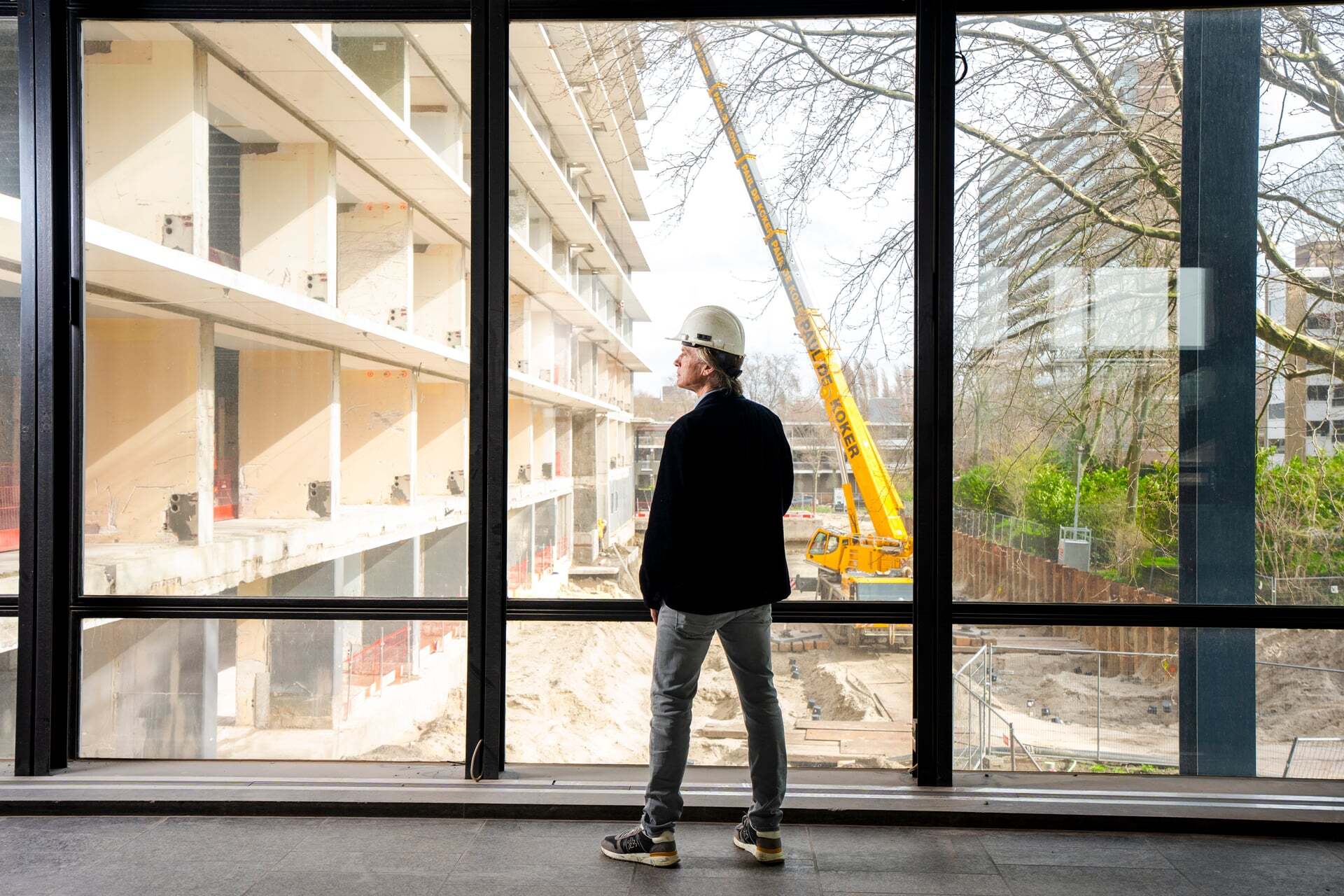
At the same time, he keeps up with trends that suit his scale of operations. Prefabricated wood construction and thorough upfront planning help him work more efficiently and make schedules more reliable. He also looks for “small” innovations that make the work easier and safer. For example, he mentions a 10-ton-meter crane that reduces physical strain and extends the availability of his workforce.
Richting 2030: zekerheid zit in keuzes niet in beloften
Johan expects the renovation market to continue to exist, but he wonders how affordability and efficiency will hold up as we approach 2030. He doesn’t address this with a grand growth plan, but with a set of principles that keep coming back: training through the school in Ruinen, collaborating and outsourcing when necessary, clear agreements in writing, established subcontractors, and being more selective about which projects are a good fit and which aren’t.
His story illustrates what many entrepreneurs are already feeling: uncertainty isn’t going away. But you can make sure you don’t have to carry the burden alone. And that starts, quite simply, with having people you can rely on and agreements you put in writing before things get tough.